Friday, 18 September 2009

Evidence Of Things Not Seen: Judaism in the twenty-first century

It is entirely appropriate, I believe, for the Jewish High Holydays to take place in our autumn. A time of change and newness, September represents important phases and stages in our lives: new school terms, new University years, new jobs. So for the Jewish New Year to fall during this busy period works well in my opinion. It sits nicely alongside these more secular occasions.
However, this year, perhaps more than any other, I have found myself questioning the festivals of Rosh Hashanah and Yom Kippur. For the uninitiated, these two festivals are generally considered to be the most important in the Jewish calendar; the first being a celebration of the birthday of the world, of the creation story, and thus a New Year under the Hebrew timescale, the second being the culmination of ten days of internal soul-searching and repentance for all manner of yearly sins and wrongs, ending in Yom Kippur itself: a 25-hour long fast where Jews refrain from eating or drinking, or other earthly luxuries from sex to shaving and even wearing leather shoes. On Yom Kippur, Jews openly articulate their wrongdoing from the previous year and ask for forgiveness from God.
On many levels, this is so important. What could be more suitable, in an age of selfishness and arrogance, where materiality takes precedent over spirituality, than to cast our minds back through the vastness of the previous twelve months and not only admit our failings, but to understand why we did them. I am a reflective young man, and feel such a Judaic device is to be applauded for the most part. The problem I have is in the nature of the repentance. It seems to me to be a little strange to be asking for forgiveness from a being, an entity, whatever you want to call him, her or it, that we have little or no evidence for the existence of, beyond what we have been told are ocular examples in scripture.
Let me be clear, today's blog is not to shatter the illusion of divinity that governs most world religions. I simply do not know whether there is or is not a God. Being brutally honest, I am one of those who goes about ritual or ceremonial duties more out of hope than expectation, believing it still important to maintain the tradition (and remembering the genuine history that prompted them) rather than completely do away with it, regardless of what the net result will be in the long run. I am, however, 100% certain in my own mind that it is possible to be Jewish and still have major doubts. After all, self-doubt is a paragon virtue of modern Judaism, so I suppose I should fit right in. There is, friends, a generational problem here, however. If I had this conversation with my mother, for example, her unflinching support for everything she has been told and taught in her life would no doubt eventually evolve into an argument with me about my lesser faith, my lapsed ability to trust explicitly.
So where do I fit in amongst the denominations of my religion? Do I fit in at all? There are, sadly, an annoying few who would claim I have no place in it whatsoever, a cabal of near-medieval prelapsarians whose literal ideology I believe to be not only morally wrong but equally socially dangerous. There are some, be they Jews, Muslims, Christians, you name it, who hold steadfastly to everything that scripture and custom and influential leaders tells them. For the most part, this is fine. In many ways it is to be applauded. There is much, as an example, within the Jewish Torah that is relevant to modern-day life, offering important distinctions between right and wrong, imploring responsibility and charity, kindness and forgiveness, moral guides to what is at times an amoral world. But it also talks about stoning rebellious sons to death at the city gates, or that homosexuality is an abomination, and even sanctions a father's right to sell his youngest daughter into slavery. By any modern moral standard, all of these are just plain wrong. The vast majority of British Jews will treat such commandments in the same way they treat meat from a pig: with some distance. There remains a minority, the same minority who consider me to be as Jewish as Egyptian footballer Mido, who will still cling to this prose as, forgive the pun, gospel.
Judaism could be doing a better job of putting on a united front. At a time when the wrongdoings of the state of Israel (goodness me that is worth a blog on its own), for example, turn attentions towards Judaism more generally, I am concerned that many people who know little about the religion in this country will see a group of people divided, of denominations clashing and bickering, resolutely and consistently articulating their differences rather than their similarities, the shared traditions and cultural elements that have sustained Judaism for thousands of years.
All across the UK over the next couple of days, Jewish families will come together both in synagogues and at home to celebrate a New Year. They will dip apple pieces into honey to help represent what we all hope will be a sweet year to come. These are the sort-of rituals that I can base a life on. Not just because I enjoy the taste of apple dipped in honey, but because it is a simplistic gesture that means a whole lot more. It is about the hope of a good year, yes, but it's also a symbolic moment shared with loved ones, and as Judaism is a family-centric religion, placing an importance on the family unit and shared family experiences, it is entirely appropriate to spread that hope around those we love and care about. Similarly, in ten days time, Jews will again congregate together as the autumn light fades and the gates of repentance start to shut, in order to break their Yom Kippur fast together, proving that even at our most personal and reflective of moments we still supplement this with a familial element. Such traditions, which include Shabbat meals on Friday evenings, or the Passover Seder, with its own myriad customs and traditions, and so on, can help Judaism thrive, and not the 'more righteous than thou' faction that stains any modern, liberal spirituality.
We need to respect each other more. I want to go about my business without being concerned at what a fellow Jew thinks of what I do. Mine is a private Judaism, one that all to often sadly clashes with its public counterpart. In my opinion (and remember this is just my opinion, with no disrespect meant to any one of my many friends and family members who think differently), we could all be afforded a little bit more leeway and freedom from judgment to be as religious as we want, or do not want, to be. Ultimately, it is more important, surely, to try to be a good person than solely a good Jew and nothing else. Liberalism, acceptance, open-mindedness is key.
This Rosh Hashanah and Yom Kippur, I will put on my suit and go to synagogue with my family. Most of it will go through one ear and out the other, and even then my ears will probably still be ringing from the gig I'm going to tonight at Wembley, even though technically Rosh Hashanah begins at sundown this evening. I'll probably not enjoy the company of those around me that much (becoming no doubt incensed by the same whispering, gossiping and general looking around for other people that I will no doubt also partake in), save for my friend Jack, who I will no doubt sit with and quietly giggle with when the choir comes in flat, or sharp, or both. I know that the Rabbi will offer a sermon on how important it is for young people to come to shul every week (why?), and to stay in contact after their Barmitzvahs (surely if you are a 'man' post-Bar Mitzvah you can decide for yourself if you want to go to shul or not, free from pressure or judgment from others?), and how the majority of the congregation only turns up twice a year and that this is not good enough (according to who?). I know I will probably disagree with him, but equally that somewhere in the sermon he'll say something profound that will grab my attention for a moment or two.
I know that I will get very little from my synagogue attendance over the next couple of weeks, until the final service of Yom Kippur, known as Neilah. On Yom Kippur I attend Neilah without fail every year, usually with both my Dad and Grandpa. It is important to me and without doubt I feel at my most spiritual, most Jewish, most at one with my family, community, congregation, the works, during Neilah on Yom Kippur. Poetically, it is a fascinating service, full of stylised prose and poetry, of close choir harmonies, all juxtaposing perfectly against the gloom of the gather dusk, where the candles in the synagogue flicker against the darkening skies. It is atmospheric and, frankly, wonderful. It is the only time I properly think about what I've done over the previous year, something I am meant to do over the entirety of Yom Kippur but which eludes me until the final couple of hours, after the anguish at my inevitable defeat at the FA Premier League Monopoly board game to my friend Jonny during the afternoon has calmed down.
It is clear, I am sure, that I am a walking religious contradiction, unsure of my place within my religion, or even if I want a place, caught between my own personal values and customs, and the wider communal pressure that is hard sometimes to ignore. In just a couple of paragraphs I talked about going to Wembley instead of seeing in the first High Holyday festival this evening, but also about a spiritual connection to later services and my strong support for many of the familial elements of Judaism. Being a good person should, nevertheless, not have to be connected to religion at all. It can be if you want it to, of-course, and this should be lauded; but it does not have to, and as I get older I'm beginning to feel that more and more, without wanting at the same time to say I'm not Jewish. I am what I am.
Clearly this is a religion of differences, and that is fine, as long as we can embrace them, whilst maintaining the traditions and cultural customs upon which it can thrive, rather than descend into a ranting fiasco of discord and disillusion. Of-course I am also aware of the irony, of how my pleading for a more liberal, open-minded, less judgmental religion has clearly clashed against some of my obviously narrow-minded thoughts about the ultra-orthodox mentality.
So be it. On Eruv Yom Kippur, which is the evening beforehand, Jews ask for forgiveness not from God but from mankind. That's something we can probably work on. Certainly I know I need to.

Friday, 4 September 2009

The Oasis Story, Part I: "Where were you while they were getting high?"

So, farewell then, Oasis. Britpop extraordinaires. Rock'n'roll luminaries. Siblings at war.
Since 1994 they have dominated the airwaves, selling over 50 million records, achieving numerous number 1 singles and albums, not to mention Brit awards, Ivor Novellos, Mercury Prizes and general critical acclaim.
I grew up listening to Oasis, to their swagger and arrogance, their commitment to escapism, the can-do above the cannot. For Be Here Now, I was there then. That album, much lambasted, affirmed my love for these Madchester madcaps. I adored Liam's croon, Noel's hooks, the soundbites, the live sights, the street fights. At their peak, Oasis defined the mood, nay the epoch, of an entire generation, and at their worst they still gave us something to talk about.
The critics, and there are plenty (and not all unwarranted), point to a formulaic policy of chord progressions and average lyrics, of the same Gibson Epiphone guitar making the same slide, the familiar beat, the traditional process of verse-chorus-verse-chorus. They are wrong. Just one listen to Standing On The Shoulder Of Giants will demonstrate Noel Gallagher's ability to mould and shape a song with more than just a guitar, bass, drums set-up. Here is an album of psychedelic charm and gothic acknowledgments, of slap-bass, gospel choirs, electric organs, flutes and synth. Musically, it is by far and away the most complex Oasis album, with syncopated rhythms and time-signatures, odd but appropriate key changes, and genuinely impressive instrumentation. People forget this album, this backwater of 2000's belated post-Bonehead, post-Guigsy comeback, but ultimately it is a fine piece of work that helps illustrate that Oasis were not just about four chords and an uplifting chorus.
Being a self-declared muso, a lover of many forms and genre, I will not be arguing that Oasis have stood above and beyond other artists over the past fifteen years. I will not suggest they were artistic revolutionaries (though politically and culturally they may have been). Nor are my affections held solely by Oasis. After all, I am sat here writing about the brilliance of Oasis while my Ipod is currently playing Everything Is Borrowed by The Streets (more on Mike Skinner's genius another time). Yet after the news last weekend of Noel's departure, of one final brotherly barrage, it is only appropriate to pause a moment and reflect on all that Oasis were and represented. So, in the words of Mike Skinner (and I'm sure you all enjoyed how I segwayed back into him): "Relax in your sitting position and listen; it's fitting."
During the early years of Oasis, from 1994-1997, they defined an era. Every decade since The Beatles has had one or two era-defining bands. Think The Beatles and The Stones in the 1960s, The Who perhaps for the 1970s, maybe Michael Jackson in the 1980s, and so on. Oasis were that band for the 1990s, capturing the mood of a UK hit by a recession (sounds familiar) and an uninspiring government who had clung to power for too long (sounds even more familiar). Unemployment was rife, crime high, and England weren't very good at football. Then Definitely Maybe came out, with its tales of living life "for the stars that shine", of just wanting to fly, living forever, feeling supersonic, of looking for some action when all that existed were cigarettes and alcohol. The guitars were turned up high, the reverb was left on, and five lads from a council estate in Burnage, Manchester, dreamed of escaping, of something better than what they had experience so far. Rock'n'Roll Star, the first track on the album, is less a statement of intent and more a call to arms. "Wake up England!", it rasped. "Let's get going."
Oasis encapsulated the mood of change, of increasing optimism that surrounded the birth of Tony Blair's New Labour. The summer of 1995 was like 1969. Knebworth. History. Right here, right now, they said. Years of Tory rule was about to end: the people would remove the chains of traditionalism and embrace a new liberal cultural of free markets, innovation, inspiration, aspiration. And whilst this sea-change in emotional, social and political opinion increased, Oasis released records with a zeal and vigour that matched the people's drive. If Noel and Liam can roll with it, so can we. If they have a masterplan then we can have one too.
This, of-course, is representative of the exterior Oasis, the chart-topping band of critical acclaim. Yet Noel Gallagher's songwriting has always contained subtleties that people today, in 2009, often dismiss. Back in the mid-1990s, Noel clearly knew his band were destined for, well, destiny, but often let his most prosaic offerings take a back-seat as b-sides and album tracks. Half The World Away, immortalised by the BBC comedy The Royle Family, strives for the same escapism of larger-than-life numbers like Rock'n'roll Star and Morning Glory, but in a far more reflective way, almost quietly noting that the madness surrounding the band and its individual members was transitory, whereas nobody could give Noel Gallagher the dreams that were his all along. It's a wonderful song, simple but so effective, still talking, almost desperately so, of something better ("I would like to leave this city/This old town don't smell too pretty/And I can feel the warning signs running around my mind"), but equally very personal: "You can't give me the dreams that are mine anyway." Similarly the arrogance of Oasis came later. 1994 b-side Going Nowhere longs for "a motorcar, maybe a Jaguar, maybe a plane or a day of fame" but ends with a negative refrain: "Here am I, going nowhere in the rain." Perhaps the adulation ruined Oasis. They were fine when there was something to strive for, but once that was achieved, one they were there then, the interest faded.
This is what makes Be Here Now so fascinating, not just as a piece of music in its own right, but where it sits in the lexicon of British culture. Released just two weeks before the death of Princess Diana in August 1997, to an hysteria last seen when Abbey Road was released, it sat perfectly as the epitomisation of new Britain. The Labour landslide was still being enjoyed, the weather was hot, the country basking in the warm and comforting glow of progress. This is why it is such a genius album title, almost as if Oasis knew that this was the highest, the biggest, they would ever be, arm-in-arm with a period of time on a societal level that could not possibly last. Be Here Now makes perfect sense and, crucially, tense: the Gallaghers were offering a final rallying-call - to join the party while it lasted, not because they were going to all of a sudden become incompetent and stop releasing great records, but because trends, by their very nature, are transitory, and deep down everyone knew this. If you weren't there then, and many were sadly not, it is likely that today you regard the passing of Oasis to be nothing more than the latest in a series of daily celebrity news stories, a fleeting by-line to a bygone era.
Be Here Now is full of imperfections and lyrical inconsistencies, from the confidence of It's Getting Better (Man!) and D'you Know What I Mean? to the heartfelt and tender insecurities of Don't Go Away (a genuinely moving track that should be on any Best Of compilation) and Stand By Me. Today it may not sit together well as a long-player, but take each track on its own for a moment, and it deserves to be listened to again. There are few better Oasis moments than seeing Liam spit out the words to My Big Mouth, as they have done live recently, a song that acts as a microcosm for the whole album: staggering arrogance mixed with genuine concern for the future - "Guess who's gonna take the blame for my big mouth, and my big name, I'll put on my shoes and walk you slowly down my hall of fame."
Without knowing it, the band became the first winner of The X Factor before Simon Cowell had even thought it up. People liked Oasis because of the aspirational attributes of the personnel and the music they played. They dared to dream, and through them so did many of us. It is why the Knebworth gigs were so triumphant, so epoch-defining, because they represented rags-to-riches in startling detail, like a real reality TV show. "This is history. Right here, right now. This is history," bellowed the band on that Hertfordshire stage.
So where were you while they were getting high, while they were providing the soundtrack to millions of people's hopes and dreams, loves and hates, highs and lows? It is easy to pick holes in Oasis, to criticise for criticism's sake, to jump on an increasingly popular bandwagon of counter-culturalism, reactionary attempts to play down what they signified and how good they were, almost as if we are embarrassed. Ultimately, folks, you simply cannot sell that many records if you are no good. Somewhere, beyond the in-fighting and the drugs, the press attention and the celebrity lifestyles, at the heart of it all, lies the music, and when you list the multitude of famous, radio-friendly songs you have to concede that these guys knew what they were doing.
"I think you're the same as me,
We see things they'll never see,
You and I are gonna live forever."
-------------------------------------------------------------------------------------------------
Coming soon - The Oasis Story, Part II: "Outta Time."

Friday, 28 August 2009

Louts vs. The Law: Prosecute the Football Hooligans

This will be my first blog on a political theme, on a current affair, if you will.
During the week, English football fans should have enjoyed a major midweek League Cup interlude, a welcome opportunity to rotate squads and partake in knock-out action in a competition that on average yields a greater goals-per-game ratio than any other. Instead, we contended with the gritty reality of a menace that stalks not only the beautiful game in this country, but ultimately exists as a societal ill as well.
In the 1970's and 1980's, football hooliganism was rife. Matches were regularly interrupted by fighting on the terraces, spilling onto the pitches, as so-called fans took local, regional and occasionally national grievances to the sporting arena. Hooliganism is nothing new, but it reared its ugly head on Tuesday evening in East London, as West Ham United took on bitter rivals Millwall at Upton Park. Even those who know little about football will, I am sure, be aware of the history of this fixture, and indeed the reputations of a certain minority of supporters of both teams.
Their first match-up since 2005, for some this was a game less about progression to the next round, and more about local bragging rights, a throw-back to those earlier decades when football took second seat to the ignorance of generally over-angered, under-worked, boozed-up louts, whose anger-management problems no doubt stemmed (and still do) from a multitude of socio-political problems in towns and cities across the UK, left fermenting until a spark, a boiling-point, a confrontation.
The authorities in the United Kingdom, particularly in England, have done a generally good job in the past fifteen years curbing some of the yobbish excesses of our national sport, to the extent that we now stand as an example for the rest of Europe of how to tackle the problem. But this is more prevention than cure, and the talk from West Ham, Millwall, and the FA this week strikes me, as it did Henry Winter in The Daily Telegraph on Wednesday, as being criminally naive and underwhelming. Lifetime bans are all well and good, but less effective when hooligans openly brag on internet forums about breaching prior travel restrictions and banning orders in order to fight outside the ground. That's before we even come on to the trouble inside the turnstiles.
Lifetime bans are needed, of-course. Yet an opportunity exists here to go further, to open up the justice system to come down hard on those who seek to destroy one of the last remaining cultural phenomenons of our nation. Football has, in many ways, become a national religion. It certainly is already a major business industry, and it seems to me that in no other industry would such behaviour be met with such a wimp response. Banking reform followed the credit crunch (or will follow it, eventually). Why is there no talk of custodial reform following the discredit crunch in the East End? Banking firms are being taxed and investigated. Why is The Firm not being arrested and handed over to the full might of the English legal system? Bans are short-term fixes, like sticking a plaster on an arm that bleeds from more than one cut. The yobs, the louts, the huddled masses of idiocy, need to not just be prevented from visiting certain geographic locations at set times, or barred from buying tickets to matches and entering stadiums. They need to be fined and, in the most severe ringleading cases, imprisoned.
CCTV footage, coupled with information from the ISPs hosting sites where the hooligan's dastardly deeds are planned in advance, can help pinpoint specific individuals at the heart of the troubles. Start with them, make an example, and send out a message. With a World Cup bid on the horizon for the 2018 competition, we cannot afford leniency.
Nor is this simply a question of boosting our bid chances, or keeping investors in English football. There is, undoubtedly, a moral imperative to make sure hooligans are suitable charged and punished. I adore going to football. Playing it, watching it, talking it - it's a passion of mine and I am proud to be a fan of Tottenham Hotspur, the England national side, and competitive football in this country in general. I travel across the nation watching and playing in matches, pay my TV subscriptions in order to watch all the televised action, sing my team's songs and learn the statistics of fanhood. I am a decent, law-abiding citizen. Hell, I'm a decent, law-abiding lawyer. There are millions more like me. (Well, maybe not millions of lawyers, but millions of decent football fans anyway.) Every weekend, families go to support their local side, Dads taking young children to see their team, their family history and local community. What a shame that on Tuesday night in East London, at a football club so steeped in wonderful traditions, such an alarming level of sheer, puerile, pathetic, menace could subsist.
West Ham United, and I say this as a Spurs fan, are a fantastic football club. They try, and always have done, to play football the right way. This is the home of the Academy Of Football, the playground of World Cup legends like Geoff Hurst and Bobby Moore, of class acts like Trevor Brooking and Teddy Sheringham, of genuinely impressive modern-day role-models like Jack Collison, who not only played in the Millwall game just 48-hours after his Dad was killed in a motorcycle accident on his way to see his son against Spurs on Sunday, but who also took a leading role in imploring supporters to leave the playing area after the pitch invasions and return to their seats. The vast majority of Hammers fans, and Millwall fans for that matter, attended the game looking forward to an exciting cup match under the Bolyen Ground floodlights.
However, as well as a need to deal with the offenders through the English legal system, questions must be put to those in an organisational capacity at Upton Park. Why were there not enough stewards? And why did those who were stewarding seem so poorly trained and equipped to deal with the problem? Why did West Ham refuse to pay for more police officers (all clubs pay for a police presence)? At the West Ham v Spurs game last Sunday, I felt the stewarding of the away supporters section was inadequate. I go to West Ham v Spurs every year, and in the past have been impressed with how we have been managed. In 2007, after the outrageously amazing 4-3 win for Spurs, the police presence was stepped up almost out of nowhere. Subtle it was not, but it got the message home to anybody thinking about causing trouble, and thus this most angering of matches for a Hammers fan passed without criminal incident. On Sunday, however, I felt there were not enough stewards or police around. Spurs fans pushed forwards, out of their seats, as the game wore on, with no response from the men in fluorescent jackets facing us. Once upon a tragic time this could have spelt serious disaster, but the fences in football have gone now. When I heard about, and then watched, what happened just two days later, I cannot say I was overly surprised.
Now is the time for the police to step in and send a clear message. Arrest people, don't just ban them. Demonstrate that hooliganism is a hallmark of the late twentieth century, not the twenty-first. Help the families who want to go to football matches free from the fear of violence.
The psychology of hooliganism also deserves attention. As President Bartlet says in The West Wing: "They weren't born wanting to do this." Loutish yobs, high on drink, low on ambition, operate in gangs in similar ways to city estates are run and defended. Ultimately, poor education and high unemployment in major urban areas contribute. People need hope: something to strive for, to work for, to become. A lack of this for so many, practically from birth, does not excuse their actions, but can help us understand the endemic nature of the mob mentality.
Urban regeneration, investment in schools, better workfare projects: these civic schemes should be coupled with actual prosecutions of current offenders, so that the next generation of football fan will never be part of, and will never have to watch, scenes like those on Queen's Street, Green Street, and inside the Boleyn, ever again.
People need something to fight for. Otherwise they just fight.
LINKS:

Friday, 21 August 2009

One Way Ticket To Hull...And Back!

Let's start by raising a glass to the glam-rock band of those halcyon 2003/2004/2005/2006 years: The Darkness. Not just because they released singles like I Believe In A Thing Called Love and Love Is Only A Feeling to great acclaim, but because the name of their ill-fated second album offered an excellent paraphrasing opportunity for me when coming up with a title for this latest blog.
Of-course, Justin Hawkins et al called it '...Hell', whereas I've gone with that industrial estuary town on the North Sea coast - Hull. This is a funny old place, with striking modern architecture fusing with the usual run-down mundaneness of northern English worker towns - glass buildings weirdly shaped sitting alongside rows of terraced houses, eventually banking on the sides of the River Humber itself, by this point flowing inexorably into the coldness of the North Sea with less of the gentle ripple of a river, and more the unavoidable might of a tidal basin.
Why did I go to Hull? Well, being slightly mentally unhinged, I decided to travel up to watch my beloved Tottenham Hotspur play Hull City in a midweek Premier League football match. Usually such decisions are laughed off by my friends and family, and the Spurs team offer up an ensuing derisory performance, as if to say, "Look, mate, honestly, don't come to an away game in the middle of the week in the north of England. We will lose this game."
Fortunately, Spurs won. In fact, this wasn't just a collection of three-points played out in usual stressful style, but in fact a classy performance, full of attacking vim and vigour, that completely dismantled whatever game-plan Hull had, erm, planned, and catapulted Spurs to the giddy heights of the very top, the summit, of the Barclays FA Premier League. The four-hour coach journey home, inexplicably sticking to the A1 from Leeds down to Essex (a county that is very important to me, but we'll go through that another time), was obviously more bearable because of the success of the preceding 90 minutes. Still, I have to question the intelligence of these TomTom gadgets. The M1 would have been faster, more direct, affording better service station stop-offs, and would have taken us through Nottingham, which has a nostalgic appeal to me that Peterborough, for example along the A1, simply does not. (Although I recall a trip towards Peterborough up the A1 with my school for a football match, I believe at Oundle School, which was particularly amusing. That game finished 2-2 by the way.)
The journey up to Hull, on the other hand, was plain sailing. The M1 was used on this occasion, proving that TomToms have selective memories. I don't need a TomTom. I am very much my father's son, and have an encyclopedic knowledge of the UK's main thoroughfares instinctively imprinted in my mind. Anyway, the M1 journey up north was fine and the geek in me was able to enjoy some key icons along the way. If you are doing a similar journey, be sure to enjoy the UK Telecommunications Centre near to Milton Keynes. You can't miss it - it's that weird thing on the left of the north-bound carriageway that looks like a scene from Independence Day, with dozens of bizarre-looking structures protruding upwards. Actually they help all of our mobile phones work, and allow for WiFi internet access in many locations. It is an integral part of our communications systems, and there it sits, like a solitary gym sock on a shower head, on the side of the M1 somewhere between Newport Pagnell and Northampton.
Further up, around my favourite junctions of 24A and 25, is the standard 'welcome to Nottingham' image of 6 gigantic cooling towers at the nearby power-station of Ratcliffe-on-Soar. As you whizz past East Midlands Airport, you can't miss them, spouting their sooty, smokey condensation across the region, ominously positioning itself close to the Brian Clough Way, the A52 itself, as it winds its way from Derby into my old haunt, the ancient city of Nottingham. My cousin recently had a look round Nottingham University (she got her AS-level results yesterday - exciting times for her indeed) and told me she loved it. I'm not sure if she was being polite or not, but the campus at Nottingham University is beautiful, and the town is actually rather pleasant if you know where you are going. Of-course, if you get mixed up on the city centre one-way system you may end up in the suburb of St. Anne's, in which case you are well and truly Robin Hooded. Round there, they'll steal from the rich or poor, and, well, just keep it.
The power-station cooling towers used to mark the end of my journey up to University from home. As I saw them coming over the horizon, I'd know I was nearly back. Sometimes I'd be a bit down about that, as I do love my home very much also, but mostly, and particularly as my time in Nottingham went on, it was a feeling of genuine excitement as to what the next few weeks may bring. That's why I'm particularly jealous of my younger cousin (but of-course very excited for, and proud of, her as well), as she goes through these fairly momentous, life-changing decisions and issues over the next few months, working out what course she wants to do and at what University. Those of us that have graduated, that are working or are in the job market, will know that in reality it feels like a monumental, almost incalculable, decision to make, but in reality tends to work its natural path and ends up being far less stressful than it should have been. I say, embrace the excitement, the possibilities, the intrigue of it all. It's a time in my life that I would dearly love to relive. I think about all these things whenever I'm on the M1 heading north. Odd, I know.
The observant amongst you will notice that I have digressed from my discussion of a trip up to Hull in order to bring in extra thematic ideas. Let's just pretend that the trip is an allegory for, well, my musings. Which leads me on to the arrival into Hull itself. I particularly enjoyed this part of the journey because we travelled along the banks of the Humber, and eventually underneath the giant steel girders of the Humber Suspension Bridge, which my Dad tells me is the largest single-span suspension bridge in Europe. It is fairly spectacular, as it juts out across what is by this point a very wide river. The most interesting point about the Humber Bridge is the fact that the two tips of each girder, at either side of the bridge, are an inch or so wider at the top than at the bottom, and the reason for this helps illustrate its scale. It is, friends, because of the curvature of the earth. How awesome is that?!
The river is populated by heavy industry by the time it gets to the Humber Bridge, with trawlers, and carrier-boats dominating its little shipping ports along the banks and heading out to sea. It has a bustle to it that must have been similar to the Thames when ships sailed right into the Port of London. These days they stop further out near Tilbury and rarely go past the Thames Barrier. There's almost something (probably patronisingly so, I apologise) romantic about the business of Hull's waterway: industrial, mechanical, purposeful.
I like how a simple journey such as that can illicit so many different trains of thought. It bodes well for my planned American road-trip later this year. I'm not sure how many songs by The Darkness will feature on my road-trip playlist, but I have managed to find a nuance to their work, entirely of my own affecting and not theirs, that back when I was my cousin's age, and busy trying to get in to University, I perhaps glossed over.
Sometimes it is difficult to grasp what is, and what isn't important. My good friend Tommy recently tried to offer some perspective to his younger brother, coming up with this rather profound statement: "Life is about how we deal with these small issues that feel huge."
I don't know whether he is right or wrong, but I suppose it's in the finding out that makes it all interesting.
This has been about journeys, and travelling, both literal and metaphorical. It works as a nice segway into one my favourite poems by Robert Frost, entitled The Road Not Taken. I hope you like it:


Two roads diverged in a yellow wood,
And sorry I could not travel both
And be one traveler, long I stood
And looked down one as far as I could
To where it bent in the undergrowth;

Then took the other, as just as fair,
And having perhaps the better claim,
Because it was grassy and wanted wear;
Though as for that the passing there
Had worn them really about the same,

And both that morning equally lay
In leaves no step had trodden black.
Oh, I kept the first for another day!
Yet knowing how way leads on to way,
I doubted if I should ever come back.

I shall be telling this with a sigh
Somewhere ages and ages hence:
Two roads diverged in a wood, and I—I took the one less traveled by,
And that has made all the difference.


Links:
http://en.wikipedia.org/wiki/The_Road_Not_Taken_(poem)
http://www.youtube.com/watch?v=50EALZU4D6A
http://www.youtube.com/watch?v=e6Nv8CEG6VE&feature=PlayList&p=74D89CE61C51BF34&playnext=1&playnext_from=PL&index=28
http://www.youtube.com/watch?v=G8rTUxtSMRo&feature=related
http://www.humberbridge.co.uk/
http://www.eon-uk.com/generation/ratcliffe.aspx
http://www.nottingham.ac.uk/

Monday, 17 August 2009

Edinburgh, Football and Perfect Weather

I spent last week in the wonderful city of Edinburgh, in bonny Scotland. I am lucky enough to have lived in Edinburgh for four of the best summers of my life, performing at the Edinburgh Festival in some really rather awesome shows. Yes, I am biased, but what the hell.


Edinburgh is truly spectacular, from its changing architecture (Gothic to Georgian to ultra-modern - i.e. the Scottish parliament), to its cobbled streets climbing up hills and inclines, valleys and dips, where history, art, culture, and extremely expensive lattes combine to impressive effect. The Festival, in particular the Pleasance Courtyard, is one of my favourite events, and favourite places, in the whole wide world. I could live permanently in this city if they could but pick the whole thing up and placed it a bit further South, so that I could remain in some semblance of easy distance to my family and friends.


I saw a number of my friends performing in shows, all of which were great, although the pride in seeing them perform, I'll admit, was tinged by a slight pang of jealousy that I was not performing alongside them, as I have done many times before. Nevertheless, if you are heading up to Edinburgh before the end of the month, check out Monsieur Montpelier and Tomorrow's Leaders at the Pleasance, Art at C Central, and Graceless at the Assembly Rooms - all good friends of mine, all worth a gander.


I made a promise to myself on the train journey back to London that I will return to Edinburgh again, not simply as a punter, but as somebody with something riding on the events of the festival, on the reviews, the gossip, the chit-chat. Still, it is always good to be in a city, even if just as a tourist, and know exactly where you are going. A bit of George Street here, a stroll down the Royal Mile there, a nip into Bristo Square later, and a tipple down York Place to round off the evening. You name it, I know the way. It feels as much as my city as parts of London do. It was with a mixture of satisfaction, nostalgia and burning ambitions that I returned home.


Yesterday, Sunday, was one of those rare days when things go right. For starters, I awoke at a fairly ungodly hour for a weekend morning to go and play football for my Sunday league side in a pre-season friendly. I had to race around the M25 (anticlockwise in the direction of Heathrow Airport) to Brunel University, where our home pitch will be for the forthcoming season, in order to aid my team's 6-0 annihilation of our admittedly feebler opponents.


This, of-course, was what I like to call a good thing. Especially pleasing were the two goals I contributed to the scoreline. It's always nice to find the net in any game, but two goals in one pre-season game help lay down a marker for the competitive action to come.


Afterwards, it was home for a quick shower, before emerging, sweat-free and positive, in my SAMUELSON 1O adorned Spurs shirt, ready for the journey east across North London to postcode N17 - world famous home of Tottenham Hotspur.


What followed was a genuinely well deserved victory over a Liverpool side lacking any sense of creative purpose and direction, not that this criticism is designed to take anything away from a committed, fast-paced and impressive Spurs display.


There are few better feelings than driving back through the boroughs of Bounds Green, Southgate, Whetstone and beyond, knowing that Match Of The Day 2 will be pleasurable viewing later on in the evening, smugly replaying the snapshots of glory from the ninety minutes before. The only thing that would have improved the afternoon would have been the BBC Radio Five Live music for Sports Report, a staccato riff of mind-numbingly romantic proportions that should really be the national anthem, booming out of the car radio, but, alas, this was a Sunday afternoon fixture, and this staple of nostalgic, traditional British sports broadcasting is solely the reserve of a Saturday afternoon.


Spurs fans do this. We accentuate the positive when there are such positives to be accentuated, but mark my words, when we inevitably fail to live up to expectations during a tricky away match practically anywhere in the north of England, most likely starting this Wednesday in Hull (a game I have decided, in my infinite idiocy, to travel up for), the knives will be out, the recriminations will begin, and all of a sudden predictions of a top four finish will be replaced by the altogether more realistic expectation of 'top 6'.


Meanwhile, the weather today is close to perfection; not too hot that it is unbearable, but warm enough to feel like August in London. Certainly warm enough to take a break from the work assignment I have currently been given (more on that tomorrow - it deserves a blog in its own right because it is, if I say so myself, really cool) to go and post a letter to my future law firm which, sadly, contains various forms relating to tax and pay as you earn claim-backs. Tax doesn't have to be taxing, folks, but it generally tends to be anyway.


I was recently involved in a conversation with my lawyer cousin about which season is the best. I automatically plumped for 2006/2007 - a campaign that means a lot to me for lots of reasons beyond football. He meant the seasons of the year, of-course. When the weather is as it is today, it is hard to go for any answer other than summer, but actually, and as with many areas requiring me to make a decision, it is not so clear-cut, and deserves further consideration. I love summer for its long days, its magic hour shadows, its opportunities for pushing my generally dark complexion towards (and a free pint from me if you can guess who I am paraphrasing) the hope of a better tan. Yet autumn is my birthday season, and comes free with that feeling of excitement, of newness, that F. Scott Fitzgerald stated can only be synonymous with the 'two changes of the year'. Orange leaves, the first frost, The X Factor battling it out against Strictly...


Still, let's not neglect winter, for those crisp blue-sky days following a bitter night; of condensation-filled breath and long coats buttoned up, cosy warmth juxtaposing against the harsh exterior conditions that only such a time as winter can provide...in England anyway. I have experienced a little bit of winter in Chicago (and will do again soon actually), and that's a whole other ball game. It's not called the Windy City for nothing.


(Actually, it's got nothing to do with the wind, and everything to do with corrupt Chicago municipal politicians spouting hot air every time they discussed and debated the city's bid to host the world's Great Exhibition in the early twentieth century. Yes, that's right, I studied History at University.)


Finally there's Spring time. 'That pretty little ring time when girls do sing', so sayeth some olde worlde English ditty. When I think of spring, I think of my school, and the smell of a cut grass - an odour that could only mean that the beautiful grounds that my school was set in were open to students to use as an enlarged playground, where Boys' School and Girls' School pupils at Habs would meet by the notorious black gates, throw frisbees, exchange glances, and discover feelings...That's why I both hated and loved the spring term in equal measure.


The sun went in behind a cloud as I wrote that last paragraph, and that means I should get back to my actual work.


Links:


Saturday, 15 August 2009

This Is...my first post.

I'll be brief.

Partly because I am not entirely familiar with how this works yet, and partly because brevity and I are not the best of friends. You will come to realise this.

So to start with, I'd like to introduce myself to you, my discerning reader, the internet at large, the world wide whatever wherever whoever.

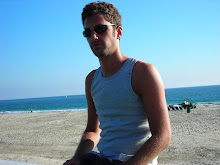
My name is Robert Samuelson. Everybody calls me Sammy and I was born and bred in Hertfordshire, North London, in a small town called Radlett. I have a job, as a trainee solicitor, but it does not commence until March 2010. Until then I just exist.

I really enjoyed school and make no apologies for that. I am an unashamed Habs Boy.

I also really enjoyed university, studying History at Nottingham. I worked as a radio presenter when I was there. I'd like to do that again one day.

There are a lot of topics I'd like to discuss, from music to politics, film to geography, food to thought. I hope you like them.

Let's start a dialogue and see where it takes us.

Oh, and I really like The West Wing.

Links:

http://www.HabsBoys.org.uk
http://www.nottingham.ac.uk
http://www.facebook.com/RobertSammySamuelson
http://www.myspace.com/SammyMusicUK
http://www.twitter.com/ThisIsSammy
http://www.urn1350.net
http://www.TottenhamHotspur.com